
How to Write a Montage in a Screenplay, in Under a Minute
Three ways to write a montage: one action line for a short one, mini-slugs across places, or full scene headings when the places matter. Shown in Plot.
Transcript
- Play from 0:00: How to write a montage in a screenplay, three ways.
- Play from 0:03: 1. Short? One action line.
- Play from 0:05: A short, repetitive montage? One action line can carry it.
- Play from 0:11: 2. Across places? Mini-slugs.
- Play from 0:13: Across places? Open with !MONTAGE: the ! keeps it an action line.
- Play from 0:16: Each beat gets a dash and a short place name.
- Play from 0:22: Close it with END MONTAGE.
- Play from 0:25: 3. Places matter? Full headings.
- Play from 0:26: When the places matter to the shoot, give each beat a full scene heading.
- Play from 0:37: Then every beat shows up in the scene list.
- Play from 0:41: The full montage guide, with page examples, is free at inkwell.software.
Match the format to the montage
A montage is a run of short visual beats that shows time passing or progress. The smaller it is, the less format it needs: a few repeated images fit in one line.
A longer one across places reads best with a clear start, one short beat per place, and a clear end.
Mini-slug or full heading
A mini-slug keeps the page fast to read. A full scene heading puts the place in the scene list and the breakdown, which matters when each place is its own setup on the day.
The full guide has page examples for both, plus SERIES OF SHOTS and a montage over a voice or a song.
Watch another lesson
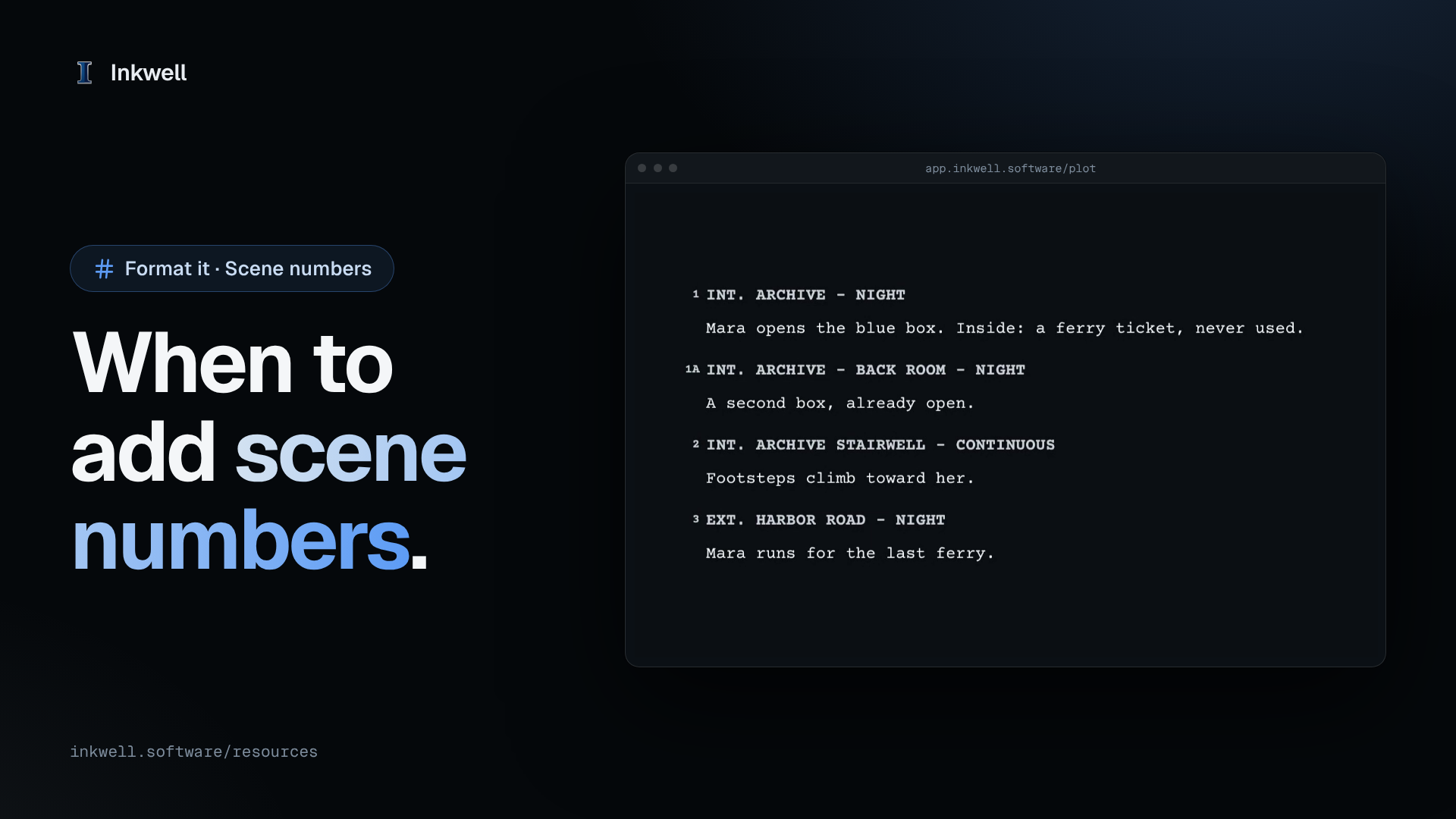
How to Add Scene Numbers to a Screenplay, in Under a Minute
Leave scene numbers off a reading copy, add them when the script goes into production, and let a scene you add later take a letter. Shown in Plot.
Watch the lesson
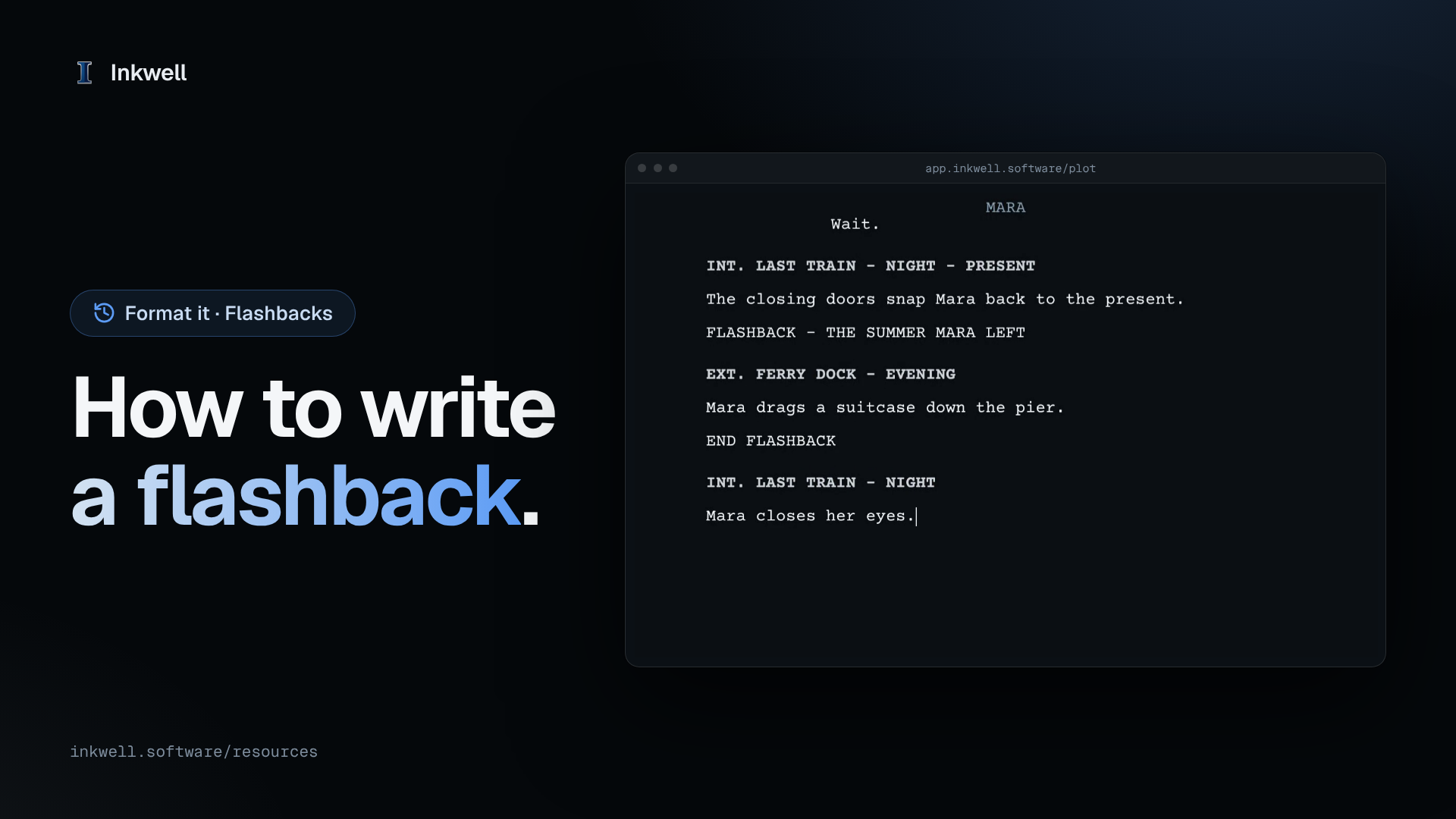
How to Write a Flashback in a Screenplay, in Under a Minute
Three ways to write a flashback: put the time shift in the scene heading, bracket a longer memory, or cut to a single image. Shown in Plot.
Watch the lesson
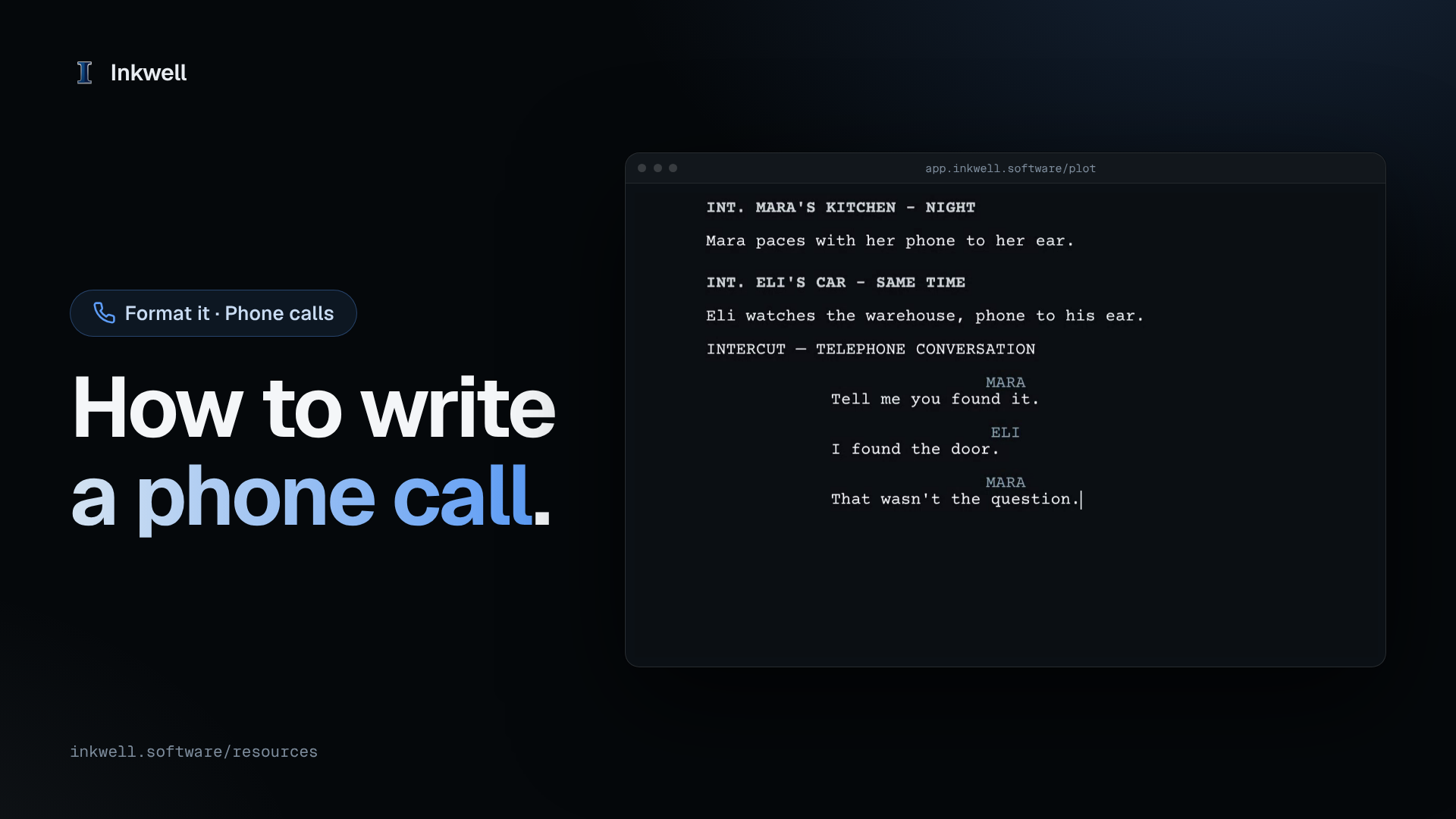
How to Write a Phone Call in a Screenplay, in Under a Minute
Give each end of the call a scene heading, add one INTERCUT line so the dialogue goes back and forth, or stay on one side and mark the other V.O. Shown in Plot.
Watch the lesson
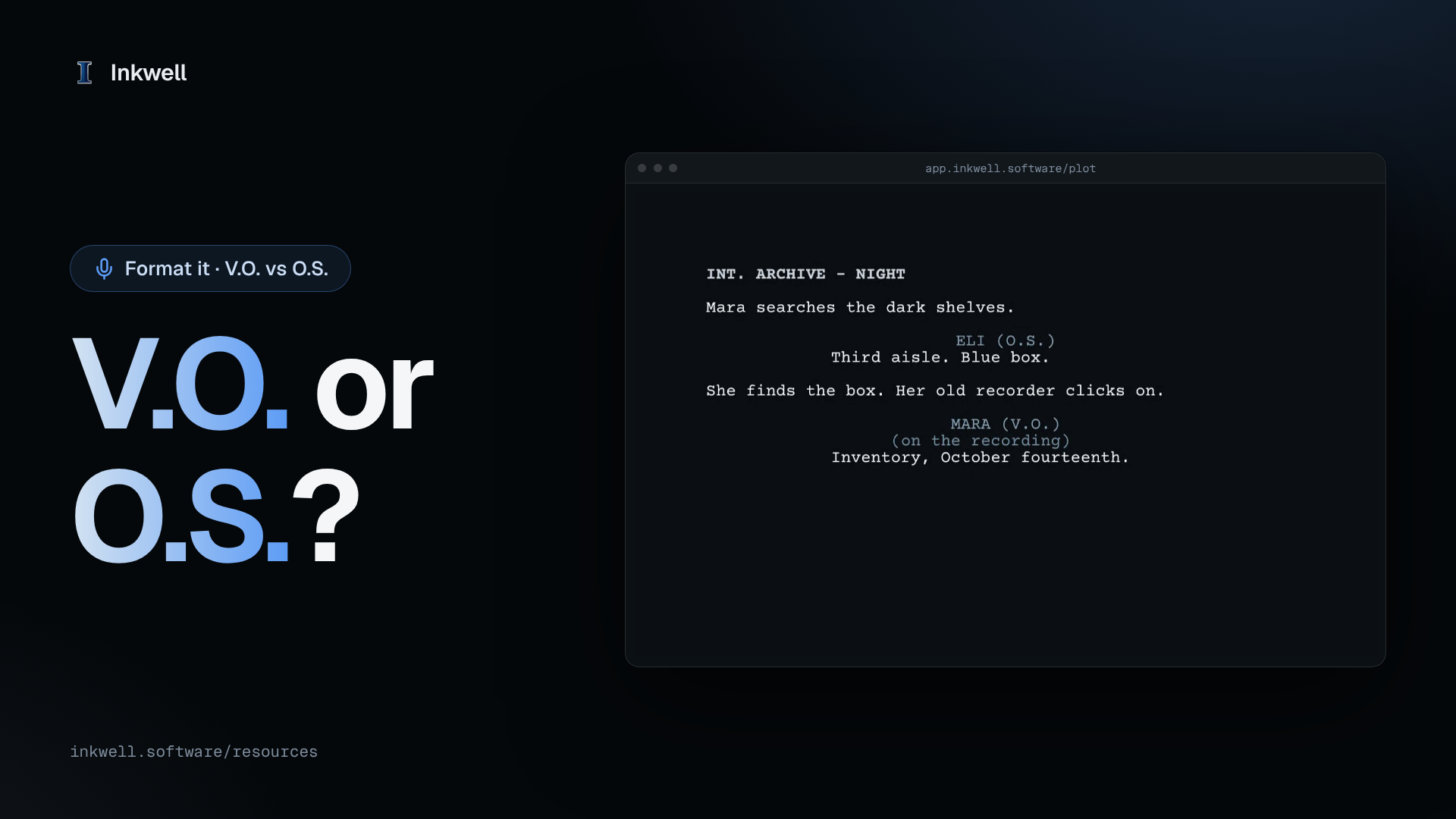
V.O. vs. O.S. in a Screenplay, in Under a Minute
Where the voice comes from decides it: O.S. for someone in the room but out of frame, V.O. for a voice from somewhere else, narrators included. Shown in Plot.
Watch the lesson